
En 2021, tomé la clase de Baldosa Marroquí enseñada por Sarah Rickards, que fue parte de la escuela de verano internacional de la Real Academia Británica del Bordado (RSN Royal School of Needlework.)
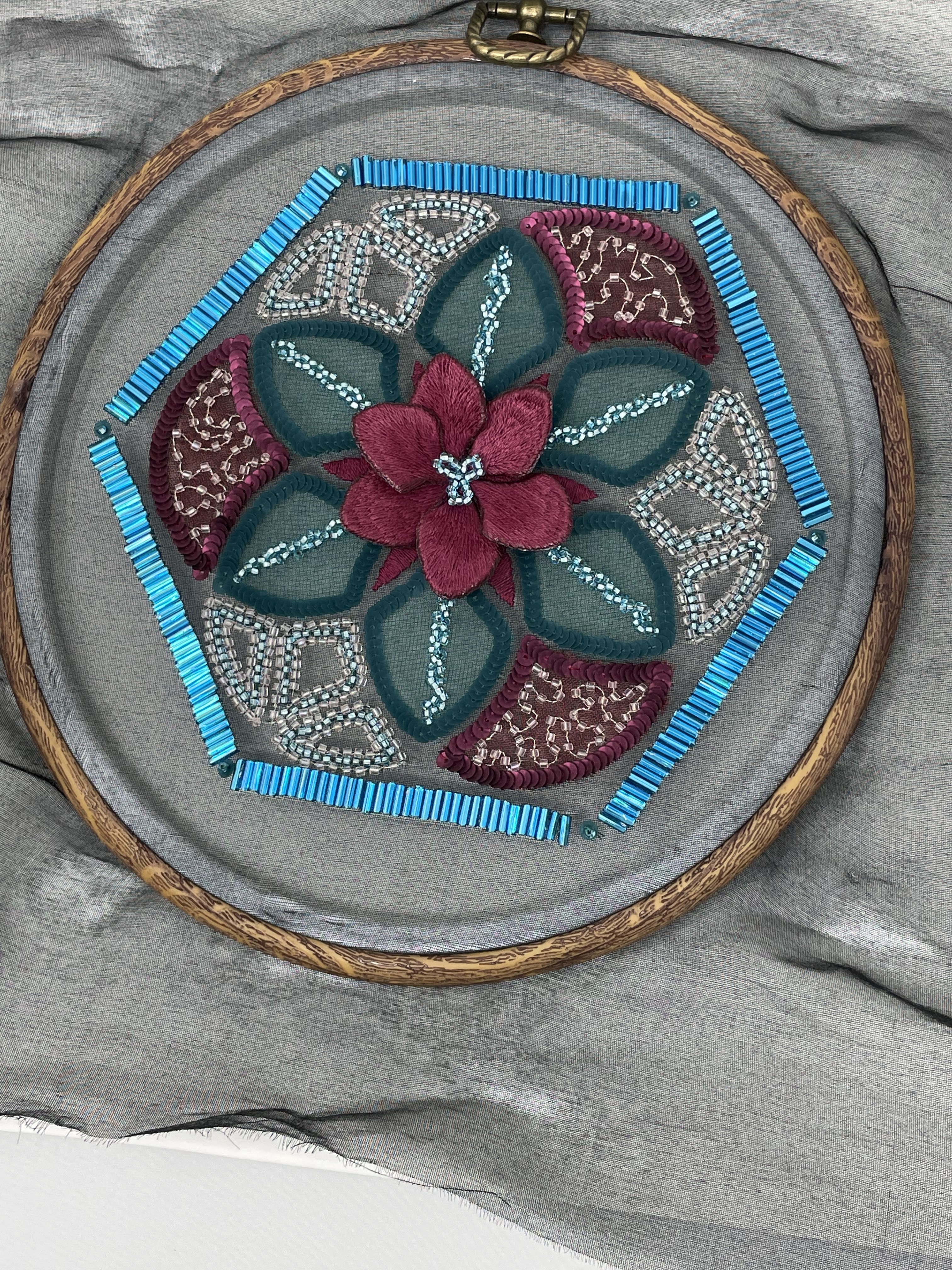
Fue mi primera vez con este tipo de bordado. Creo que fue algo ambicioso de mi parte. ¡Quizás eso explica porque me demoré 2 años en terminarlo!
El tambour de Lunéville, que también se conoce con otros nombres, no se hace con aguja regular sino con un ganchillo especial. Se hace sobre tul de organdí (la tela casi transparente) y se cose por el revés de la tela.
- Tambour de Lunéville
- Crochet de Lunéville
- Bordado de tambour
- Ganchillo de Lunéville.

El ganchillo de Lunéville
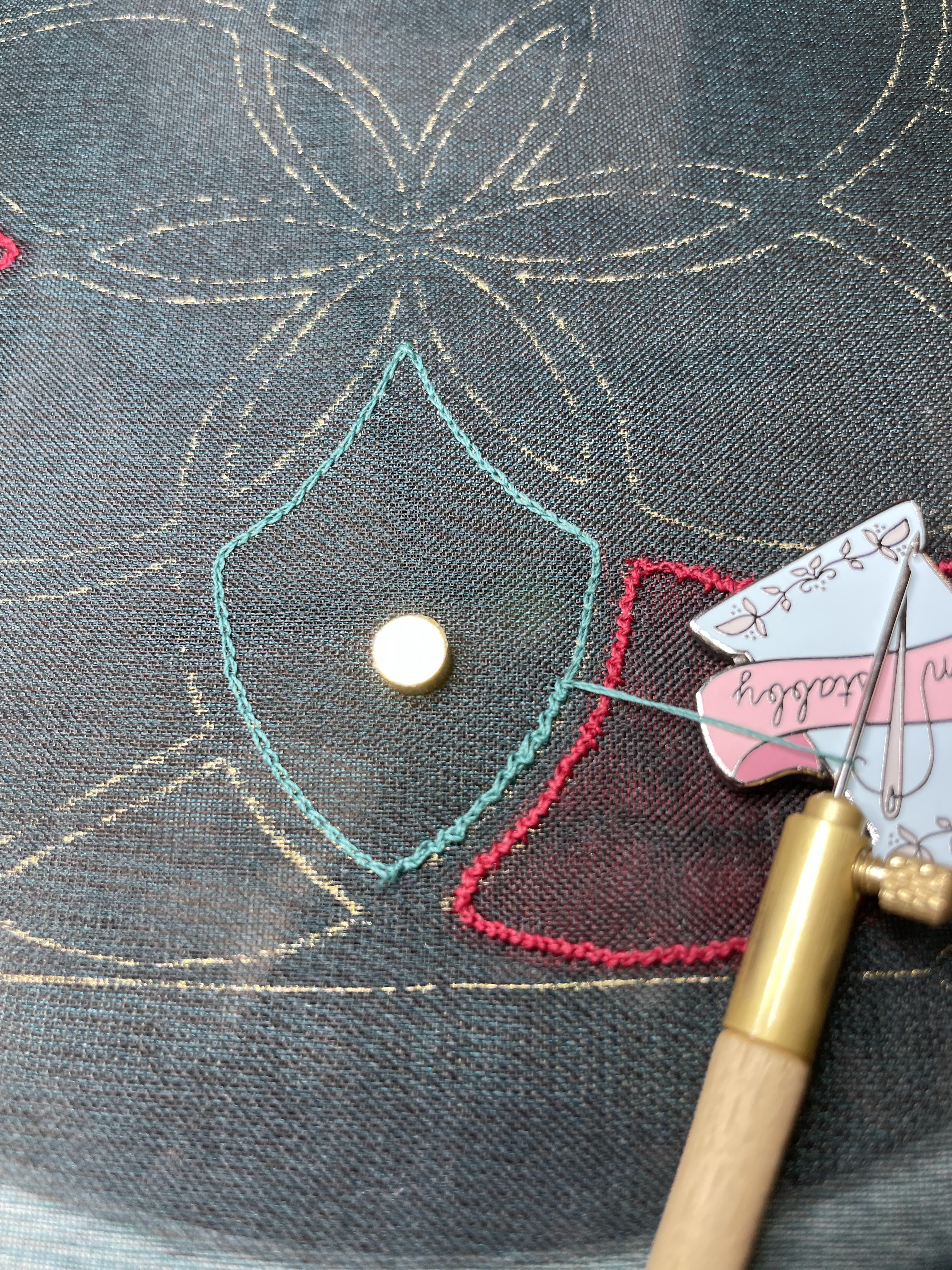
Los pétalos van en appliqué. Se cosen por el revés.
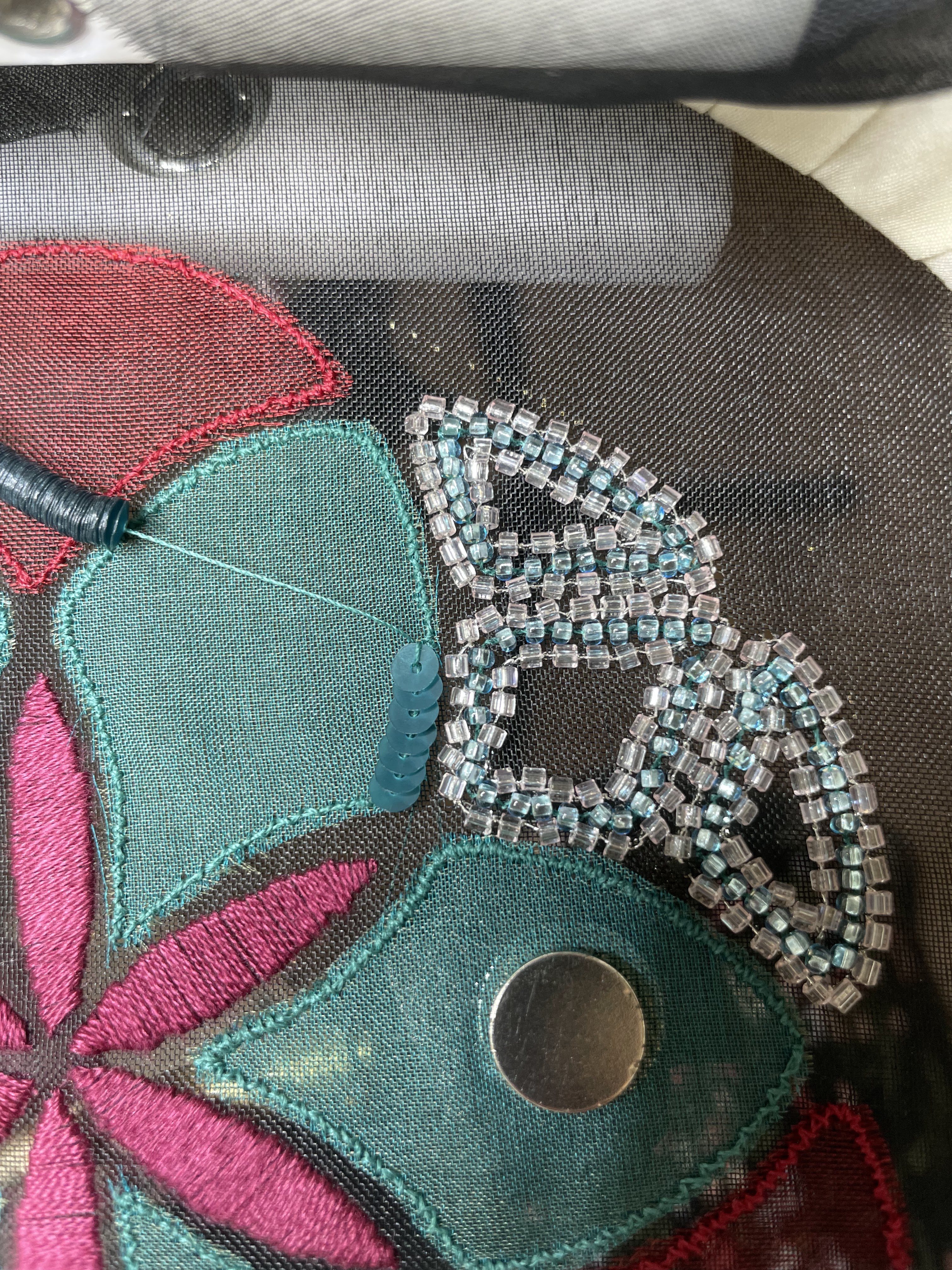
Foto del derecho de la tela. Las lentejuelas van alrededor del borde de los pétalos para cubrir la costura.
Porque se cose por el revés, hay que ensartar todas las cuentas o las lentejuelas en el hilo. La punta del hilo se asegura a la tela y el resto va enroscado en un carrete o bobina.
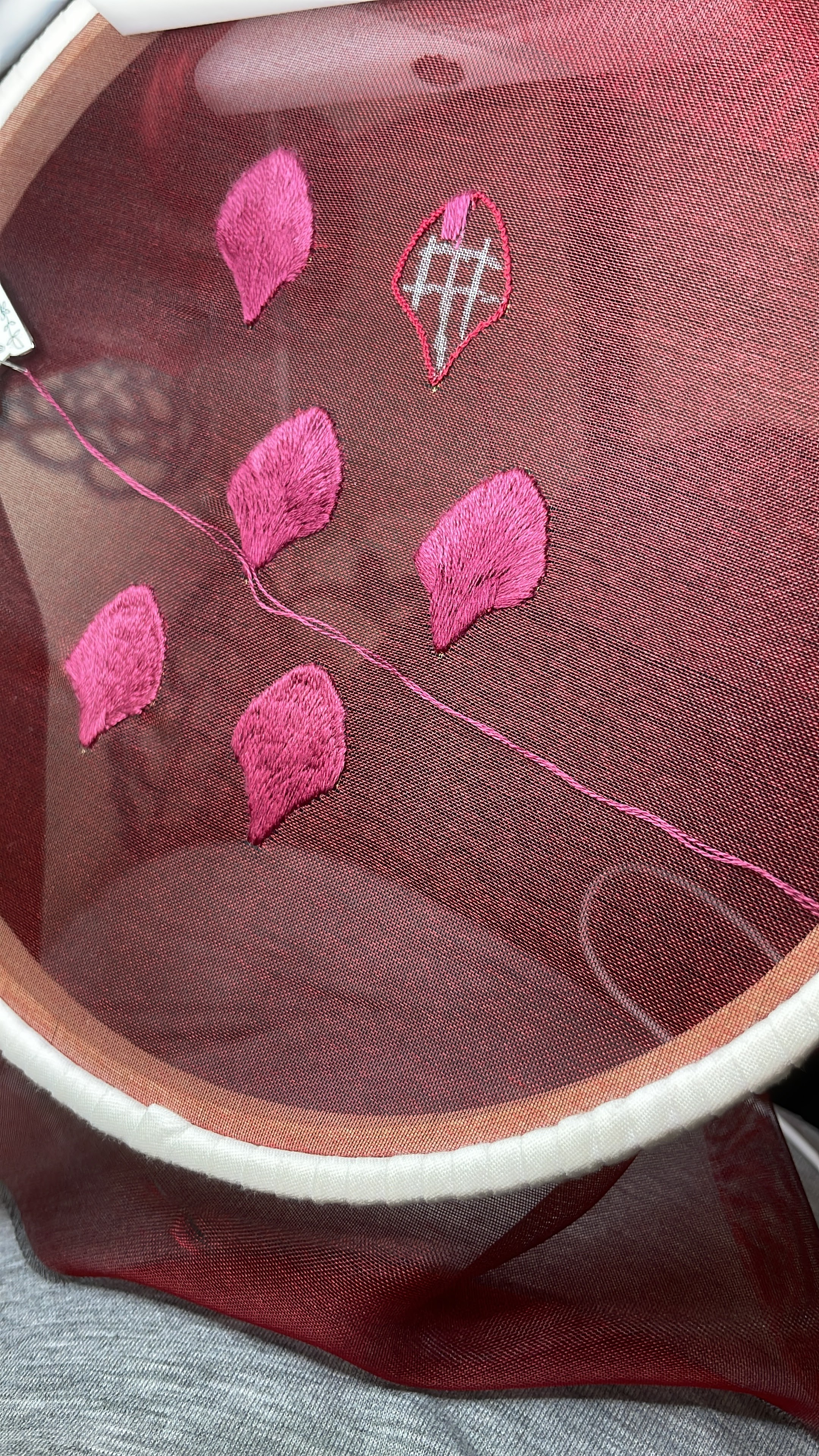
Bordé los pétalos del centro con una aguja regular usando puntada pasada. No pude hacer que las puntadas de cadeneta del ganchillo me quedaran lo suficientemente planas.
Fue un proyecto muy hermoso. Me tomó mucha práctica aprender a hacer la puntada básica, la cadeneta. Pegar las cuentas y las lentejuelas también fue difícil: toca sujetar la lentejuela o cuenta contra la tela mientras se enrolla el hilo en el ganchillo–mucha práctica.
Este tipo de bordado es el que se usa en la alta costura (haut couture.) Son esos vestidos vaporosos con faldas y corpiños de tul que brillan con cuentas y lentejuelas.


 Empty Thimble