Cartago Embroidery Trip (Part II)

The Courageous City of Cartago

The next tour I took with WowCo was about the history of the city of Cartago, la valiente ciudad de Cartago.

Park of the Journalists (Parque de los Periodistas)

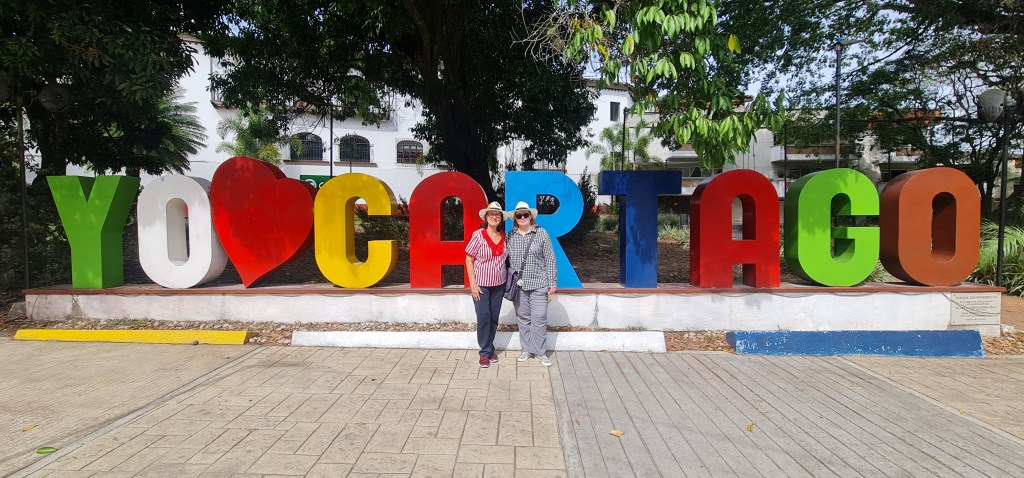
We met at the Park of the Journalists, next to the I love (heart) Cartago sign.
Isleta Park (Parque de la Isleta)
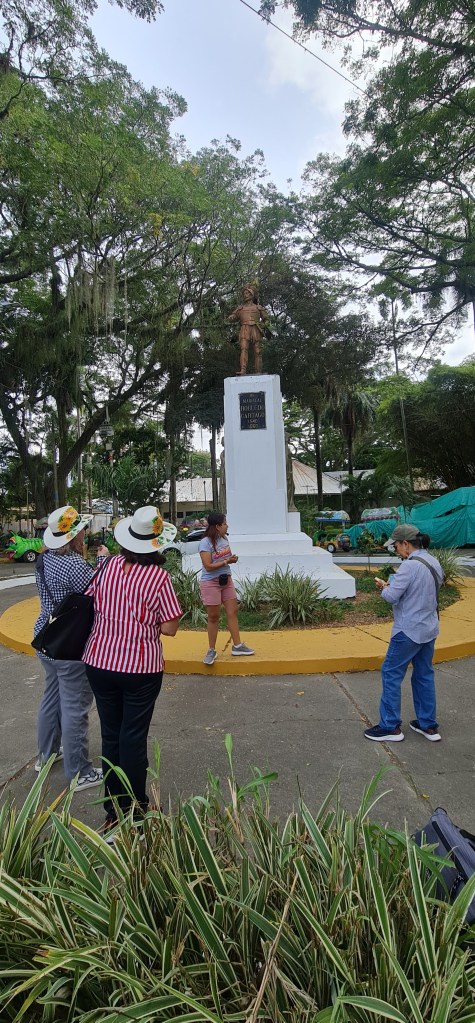
Monument to Cartago’s Founder, Marshall Jorge Robledo, Isleta Park.
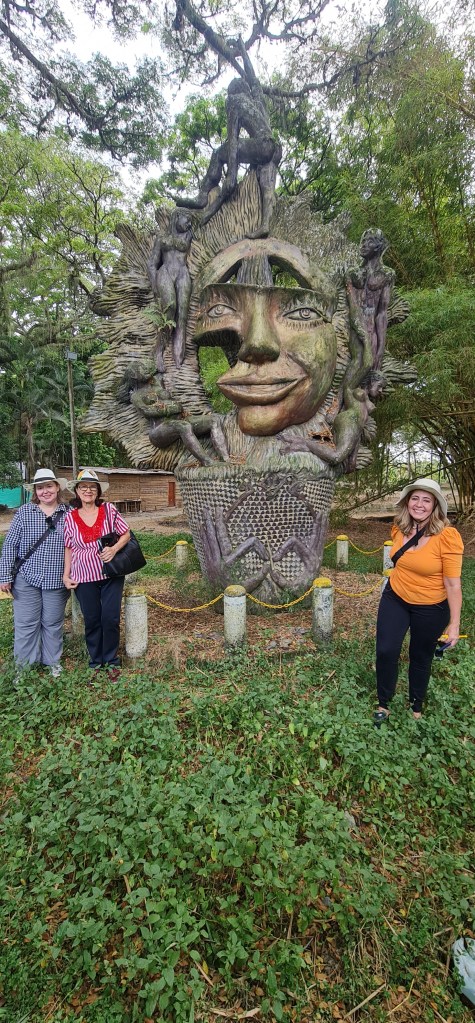
Monument to the Sun, Isleta Park.

Old Railway Bridge, Crone River (Puente del Ferrocarril, Río La Vieja)

The river that passes through Cartago is called La Vieja, meaning the old lady or crone. It received this name because of a story written in the book Elegías de Varones Ilustres de Indias (Stories of Illustrious Men of the West Indies.) Captain Miguel Muñoz arrived to the area of the river that would be called the old lady/crone in 1536. He found an elderly indigenous woman dressed in fine gold jewelry. So the foreigner proceeded to steal the lady’s jewels and kill her by throwing her into the river.

There is a movement retelling the story from the elderly lady’s perspective and make her anonymous no more. They call the river Tata Yamba, meaning Yamba’s mother. This references Quimbaya Chief Yamba and imagines that it was his mother who was assaulted and killed by the Europeans.
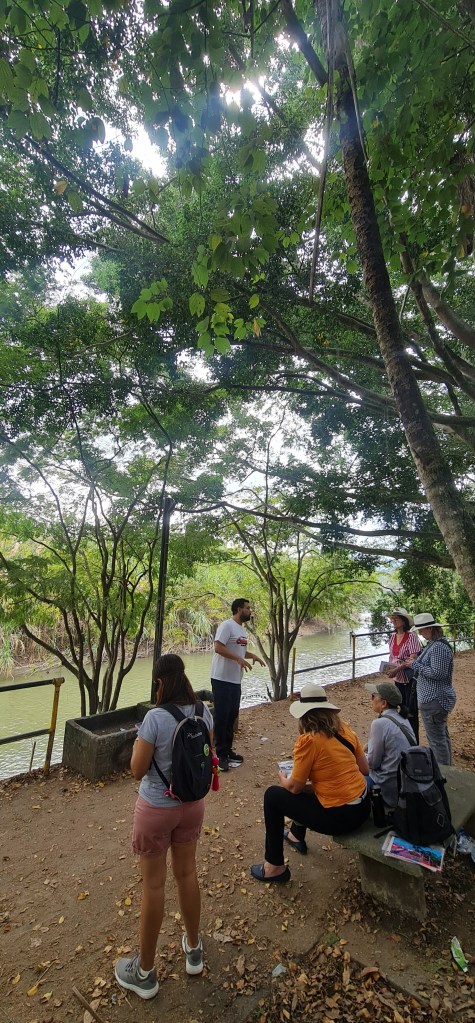
Crone/old lady (La Vieja) River. Andrés Felipe Castaño from WowCo leading the tour.
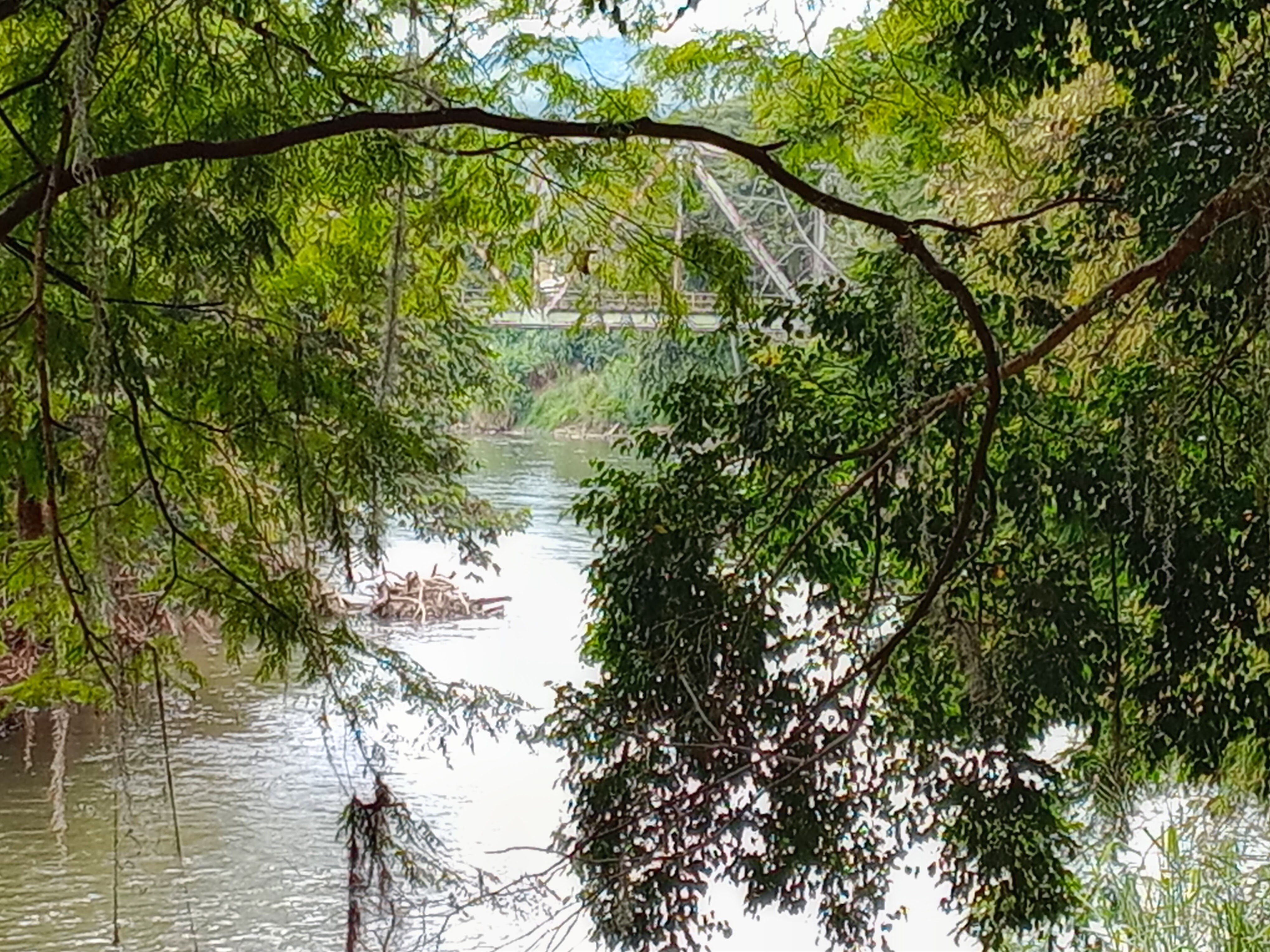
Old Railway Bridge.

We found some new embroidery-themed floor paintings and graffitis on the way.
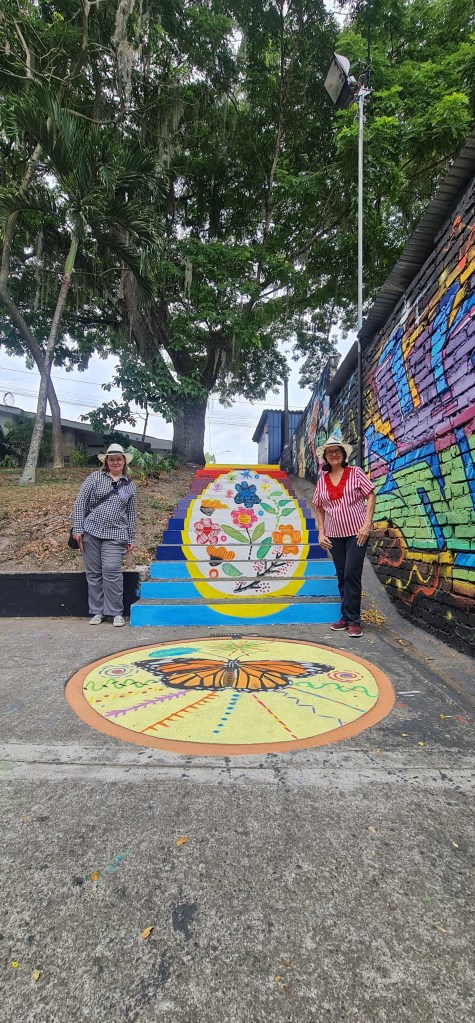
Embroidery-themed paintings and graffitis

Pedro Morales Pino Plaza (Plazoleta Pedro Morales Pino)

Some of Cartago’s many churches.
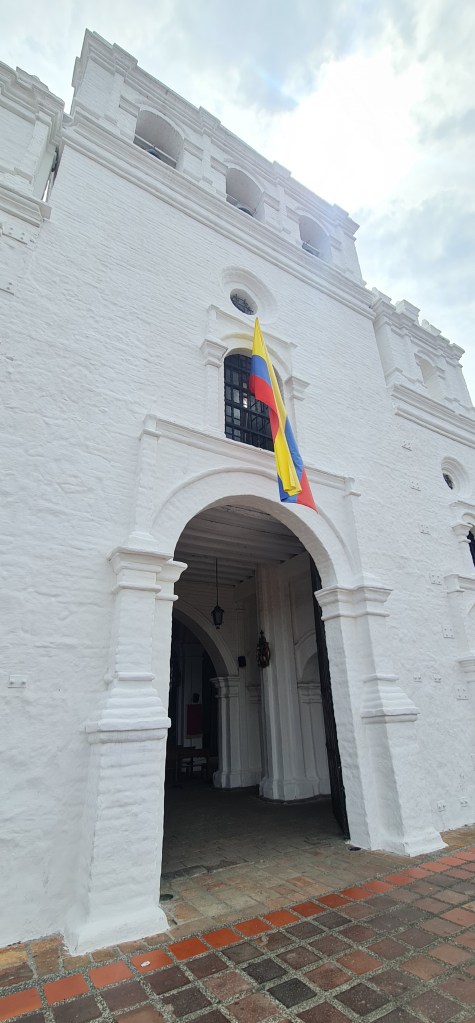
Church of Guadalupe
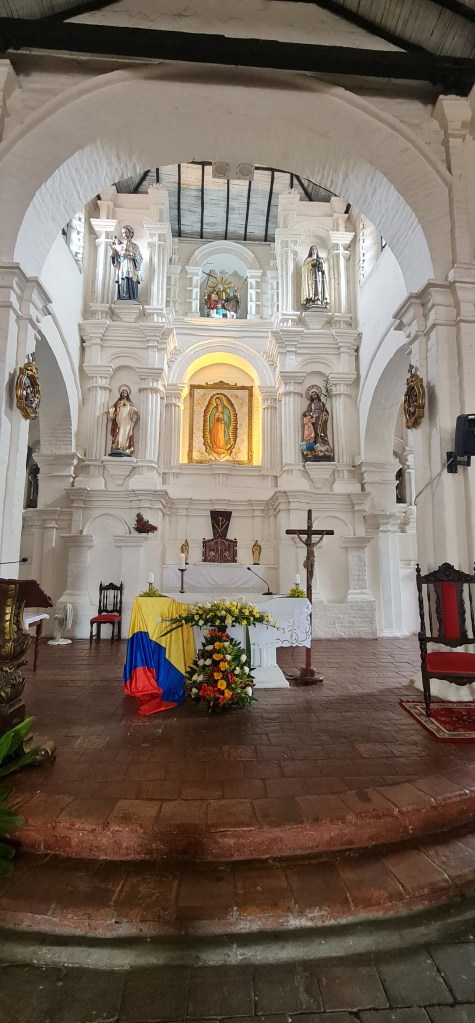
Church of Guadalupe

House of the Artisan (Casa Artesanal)

There is a really nice little store selling handicrafts in Pedro Morales Pino Plaza across from the Church of Guadalupe. It is a cooperative space where each artisan has her own space to sell her wares.

House of the Artisan

The city is seeing lots of public works improvements.
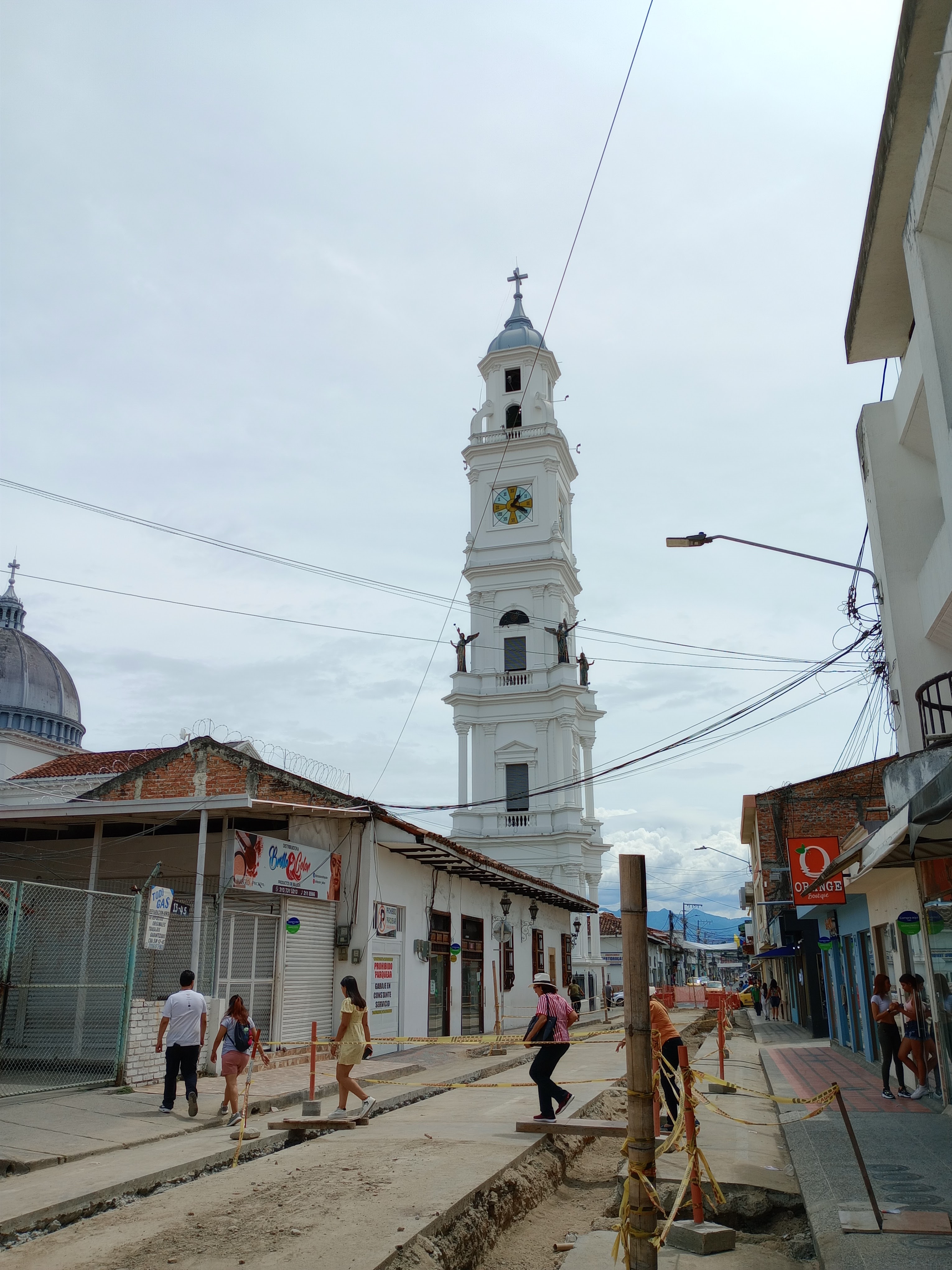
Church of Mt. Carmel bell tower

Church of Mt. Carmel

House of the Viceroy (Casa del Virrey)

The house of the Viceroy was built in the late 1700s (18th) century by the Marisancena family to allegedly receive the Viceroy José Manuel Ezpeleta.

The Pedro Morales Pino Music Conservatory is housed in the back half of the property.

House of the Viceroy
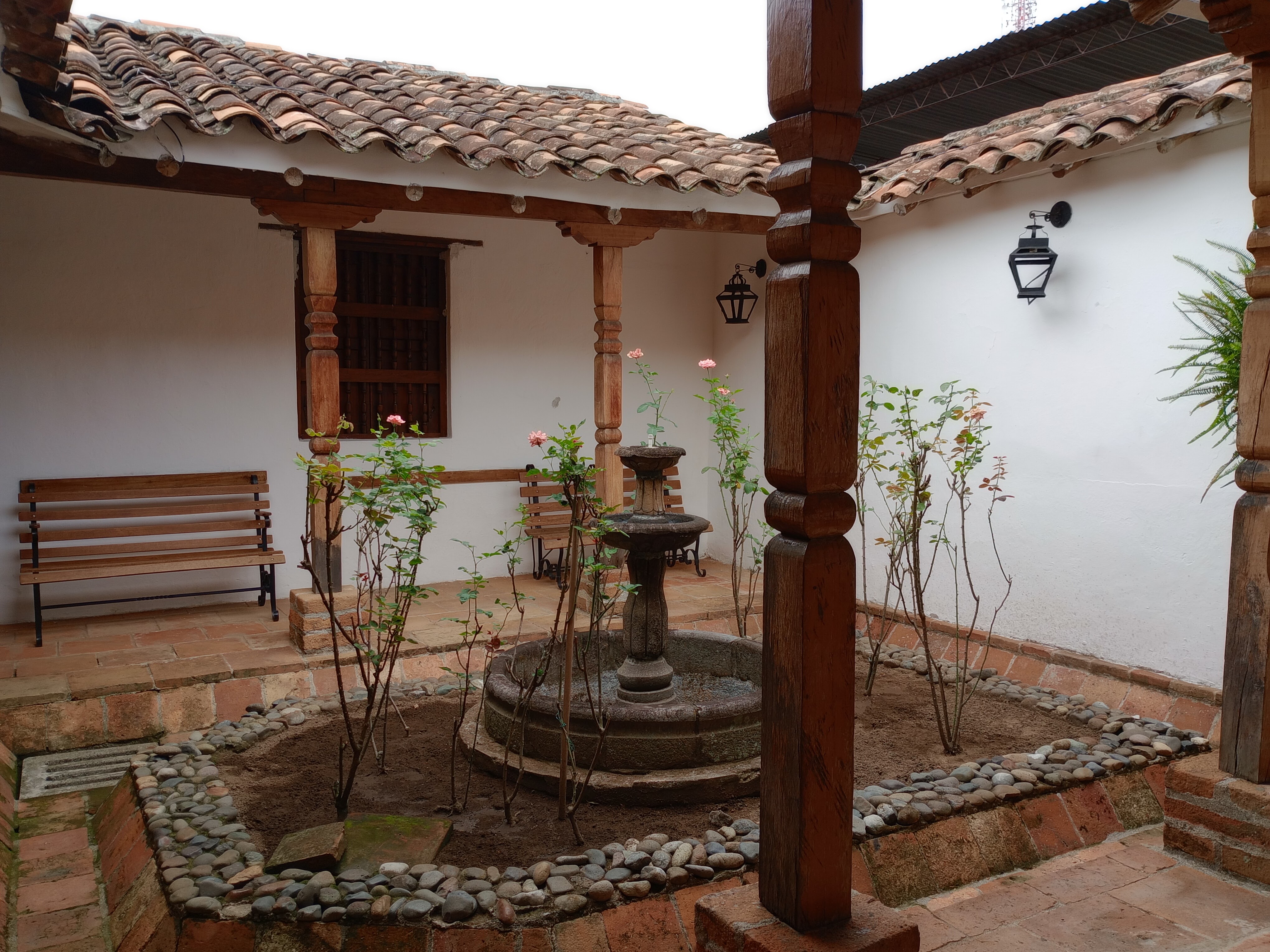
Interior courtyard, house of the Viceroy
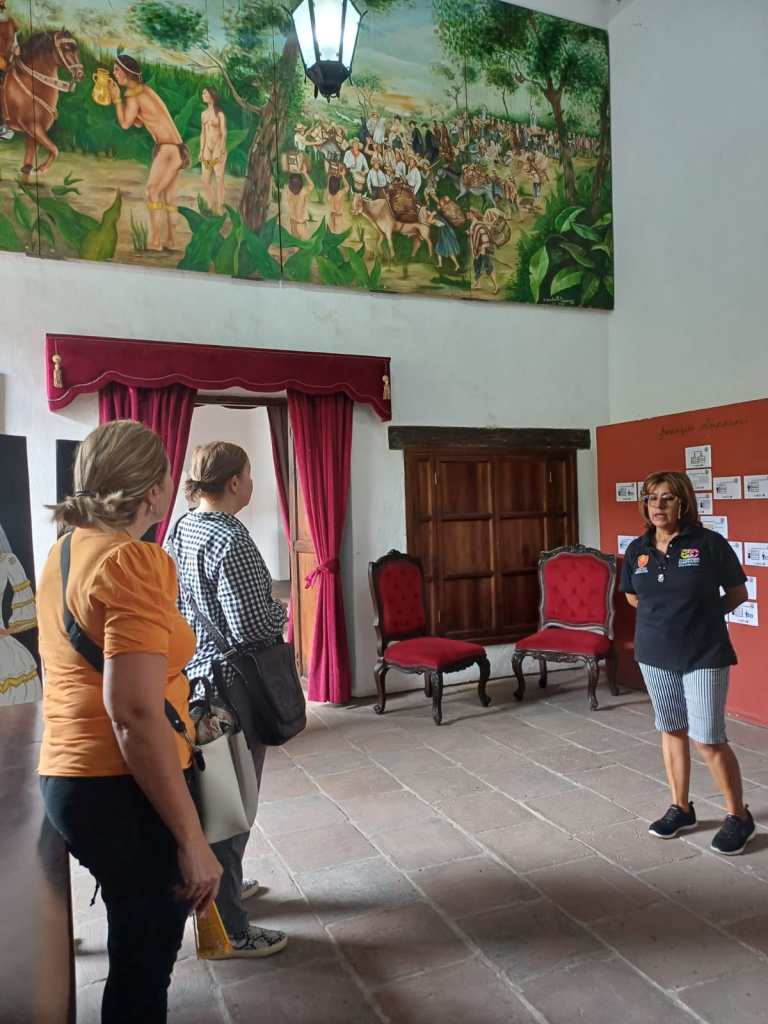
House of the Viceroy tour

Entrance, house of the Viceroy
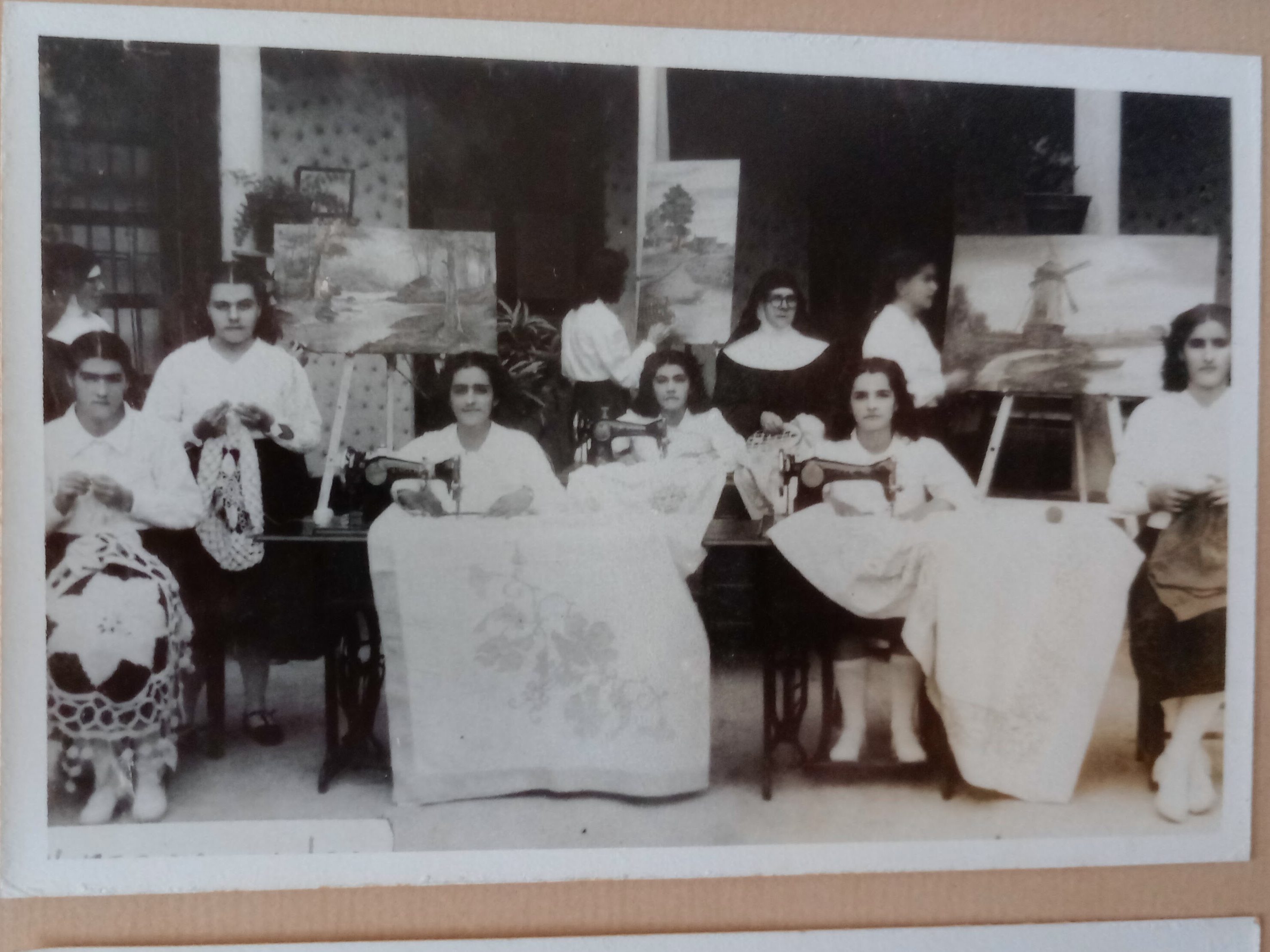
Sewing class at the María Auxiliadora (Mary help of Christians) School
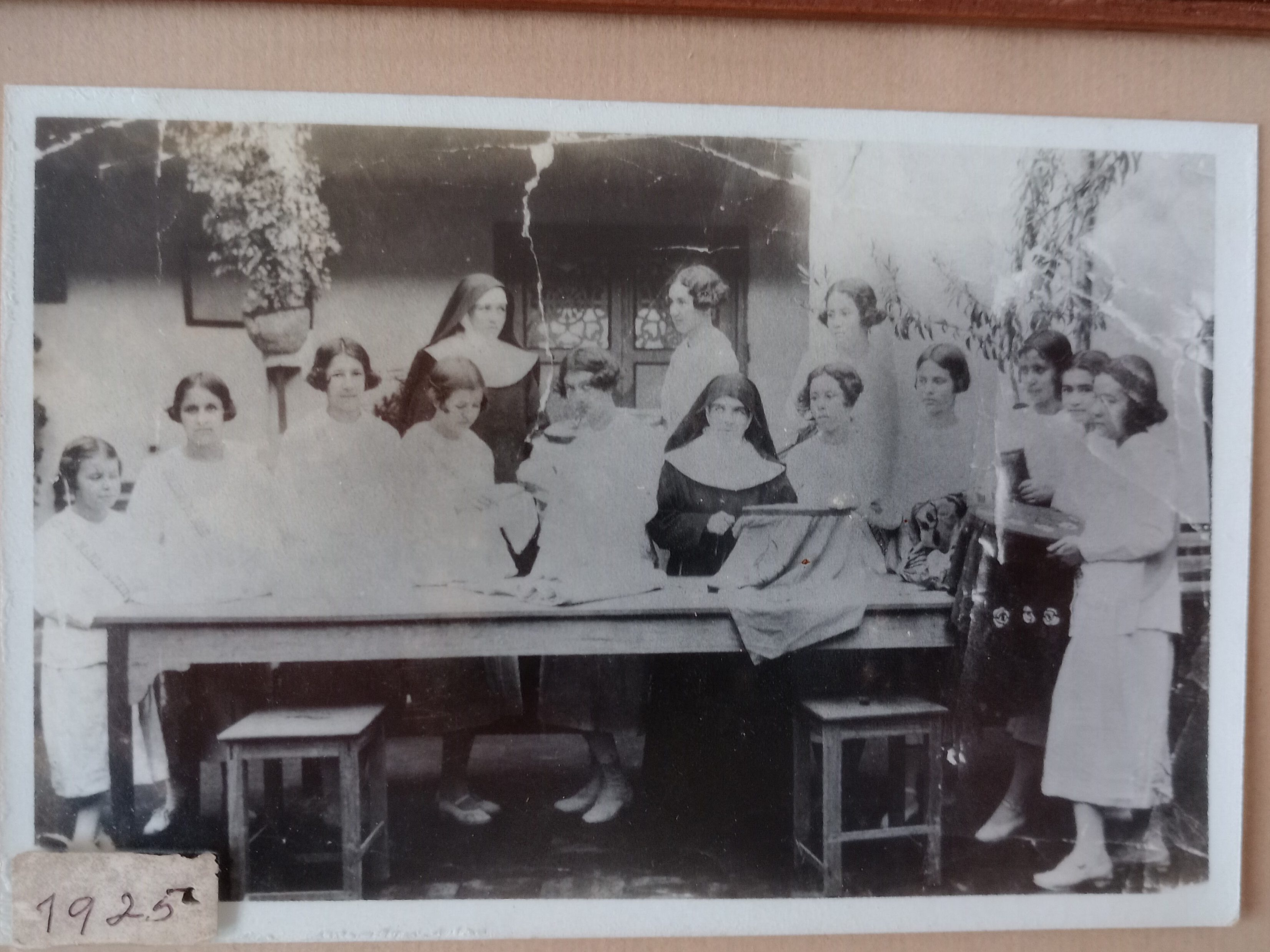
Embroidery class at María Auxiliadora School, 1925.
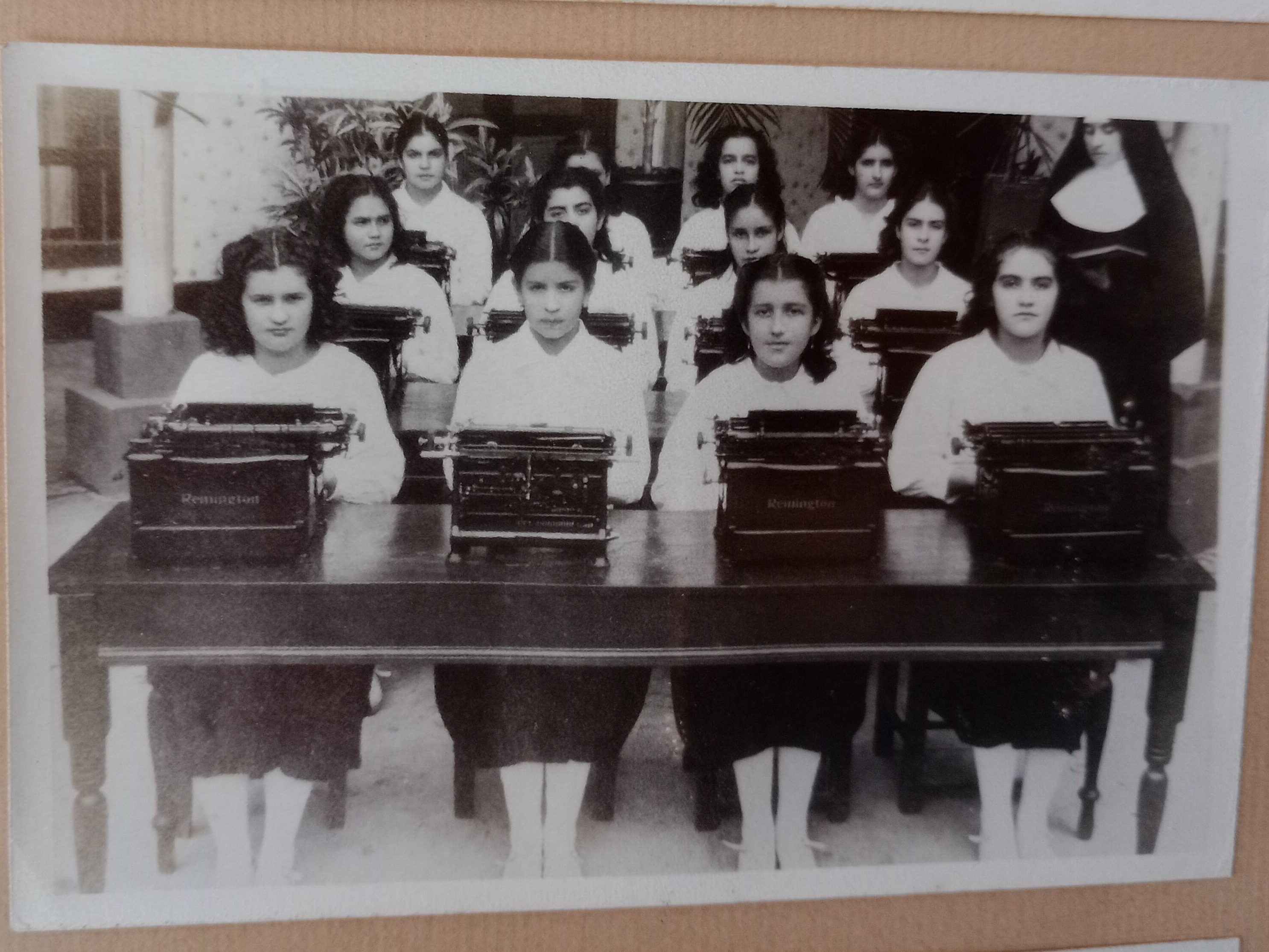
The girls also learned work skills like typing.
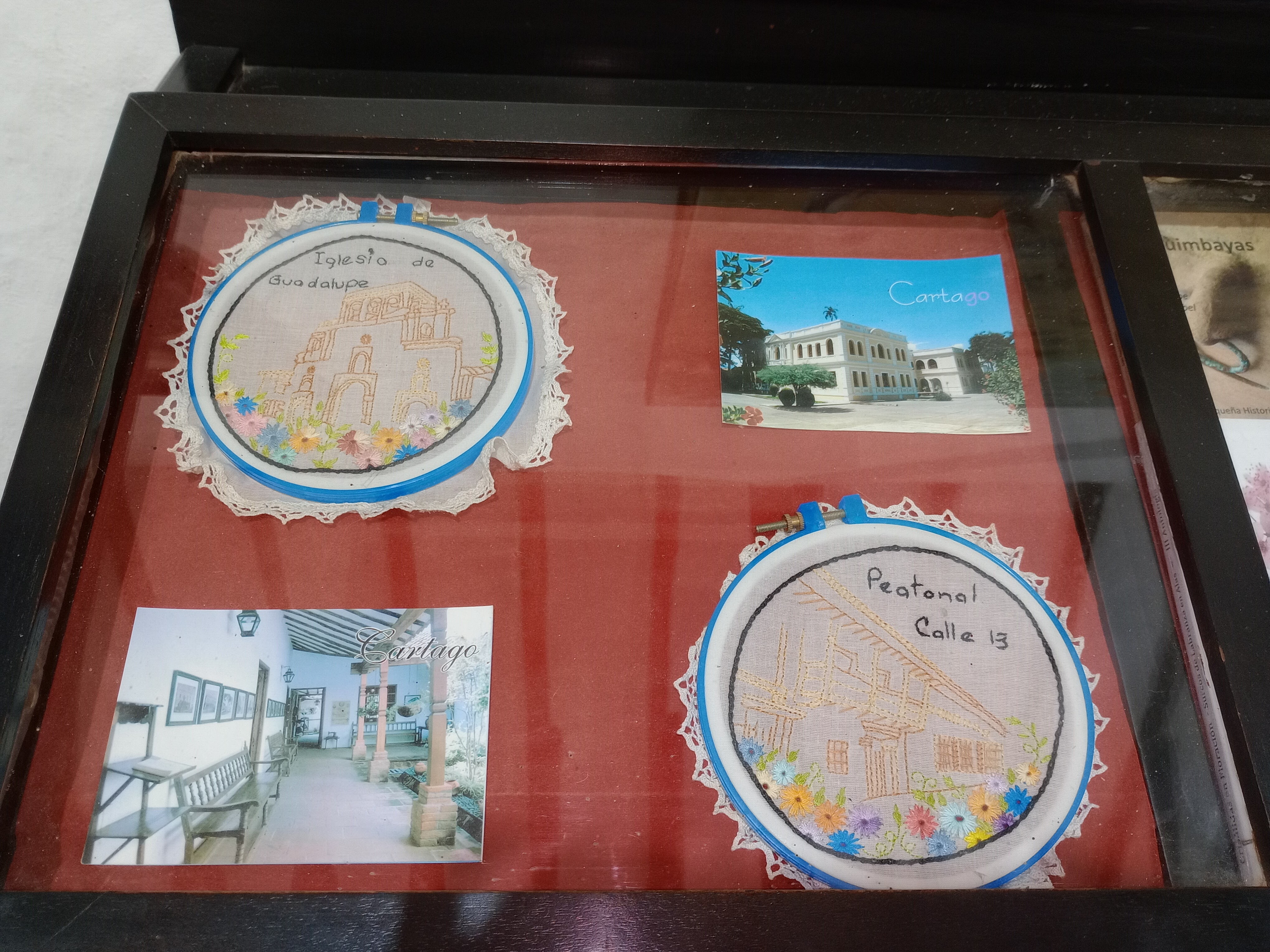
Embroidery is part of Cartago’s identity.

There is a saying in Cartago, Más cartagüeño que un bordado. It means more Carthaginian than an embroidery. It is used to describe someone or something that represents the city’s identity well.

Window, House of the Viceroy.

Cartago was founded on August 9th, 1540. It just turned 483 years old this year (2023.)

There is lots to see and do in this old city.

Bordado Colombiano

¡Feliz cumpleaños, Colombia! 20 de julio de 1810.

Para celebrar, vamos a hablar de algunos de los bordados colombianos.

En Colombia manda el tejido (algodón, lana, caña flecha, fique, calceta de plátano, etc.) pero el bordado también es apreciado.

Calado de Cartago

Comenzamos con el bordado más famoso, el calado de Cartago (Valle del Cauca.)

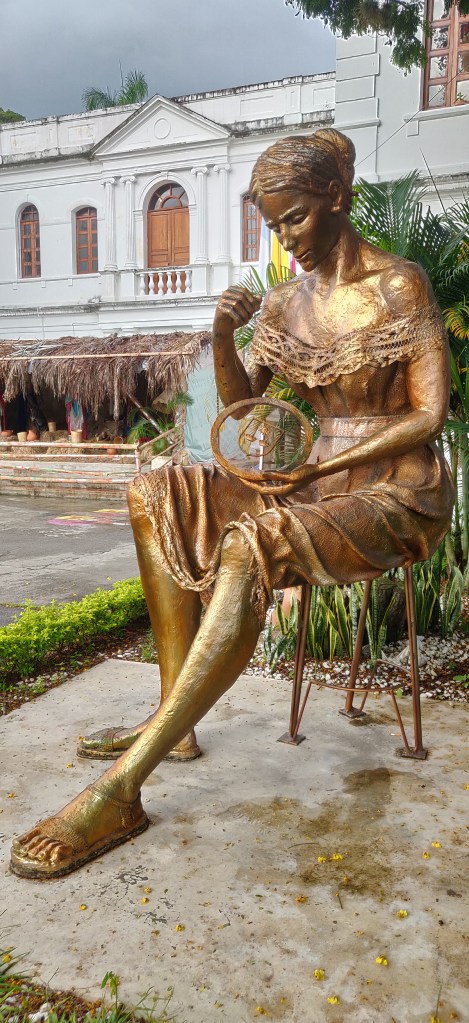
Penélope, monumento a la bordadora, Cartago, Valle del Cauca, Colombia.

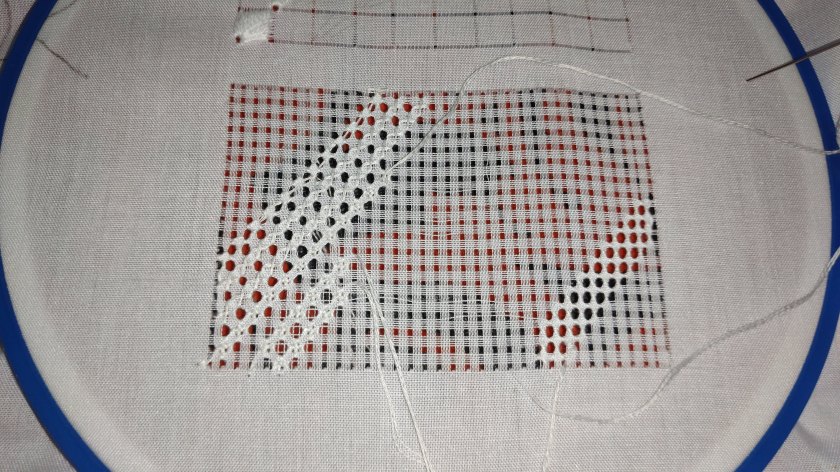
Es una clase de bordado en blanco. Se hace sobre lino o algodón, pero tejido en ligamento tafetán. Se sacan los hilos y luego se vuelven a coser formando diseños geométricos muy lindos al sesgo o biés.

Calados de Cartago en progreso.

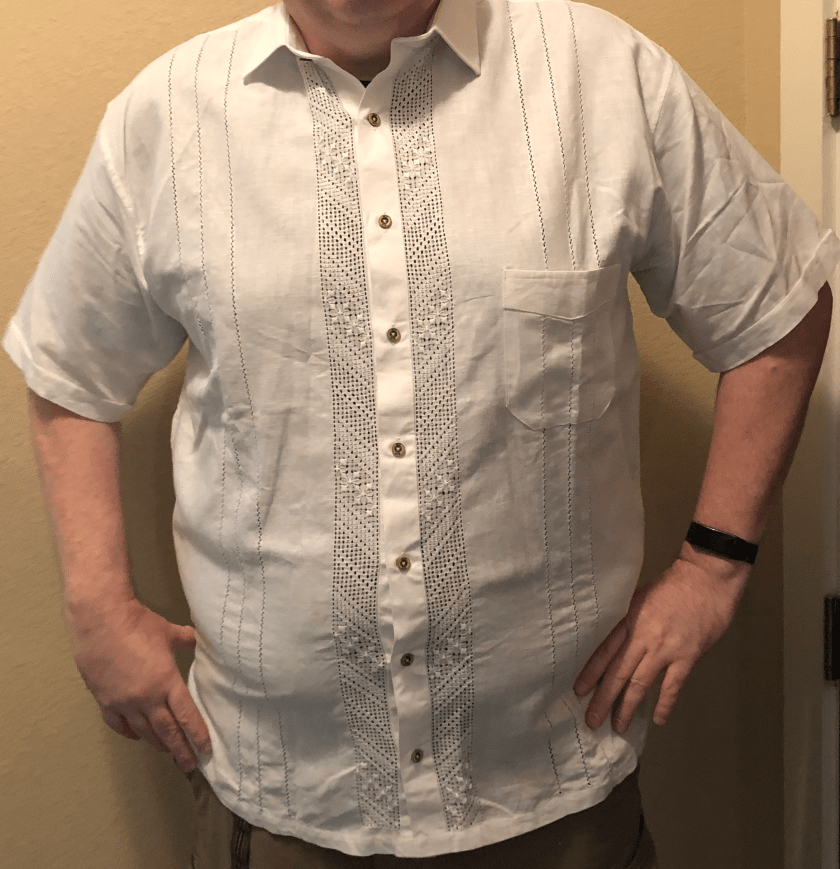
Los bordados se usan para decorar sábanas, manteles, cortinas, y las famosas guayaberas caladas

Guayabera calada

Bordado en lana de Fonquetá

En el altiplano cundiboyasense, se produce lana de oveja, y esto llevó al bordado de lana sobre lana.

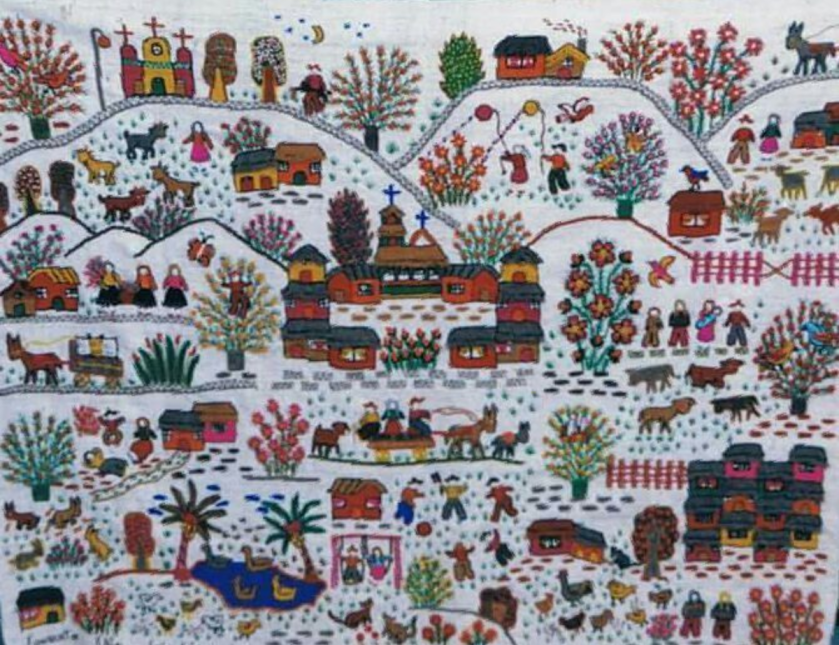
En Fonquetá, Cundinamarca, se bordan las mantas de lana con hilos de lana.

Bordado en lana del taller artesanal de Fonquetá (@tallerartesanalfonqueta)

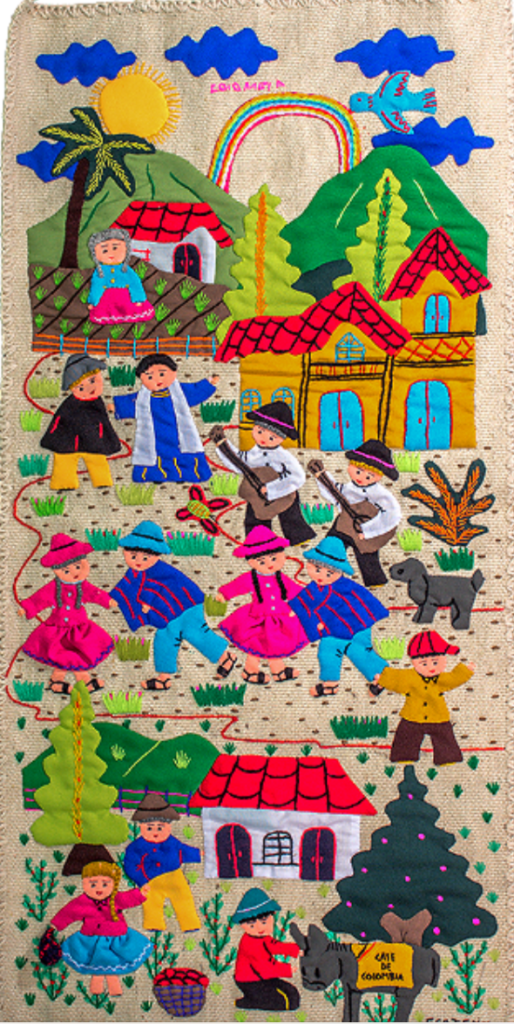
Gobelinos de Pasto, Nariño.

En la ciudad de Pasto, Nariño, se hace un bordado sobre paños de lana usando aplicados de tela de algodón, con detalles en hilos de algodón.

Gobelinos de Pasto de la cooperativa Ecotema

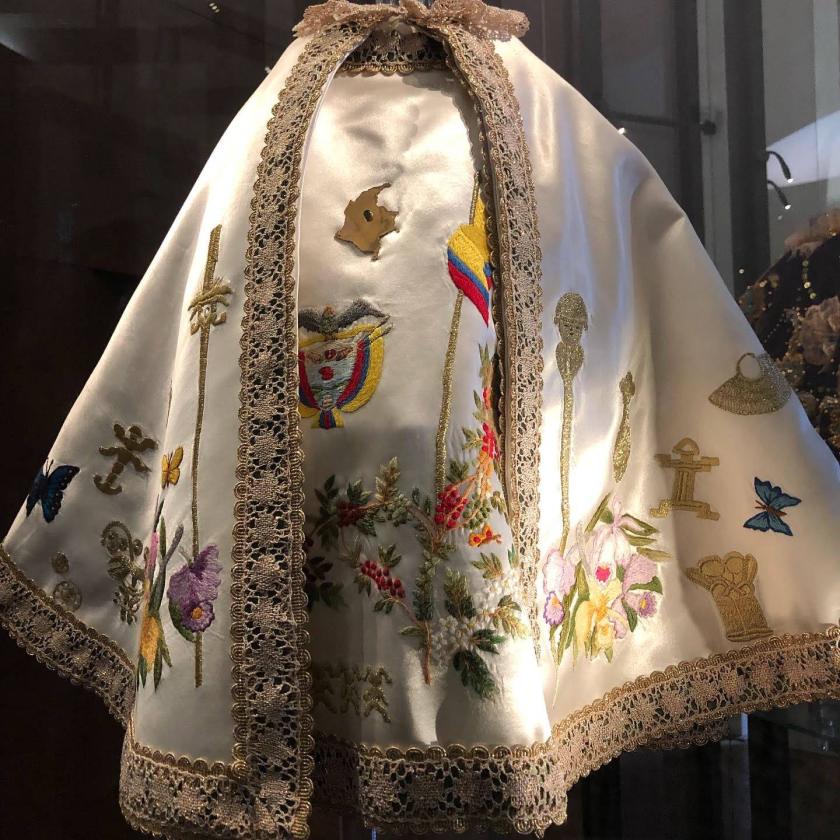
Vestido bordado del niño de Praga

Y cuando estuve en Praga, República Checa, pude admirar la labor de doña María Mercedes de Duque, que le hizo un vestido al divino niño de Praga con los símbolos patrios.

Vestido del niño de Praga.
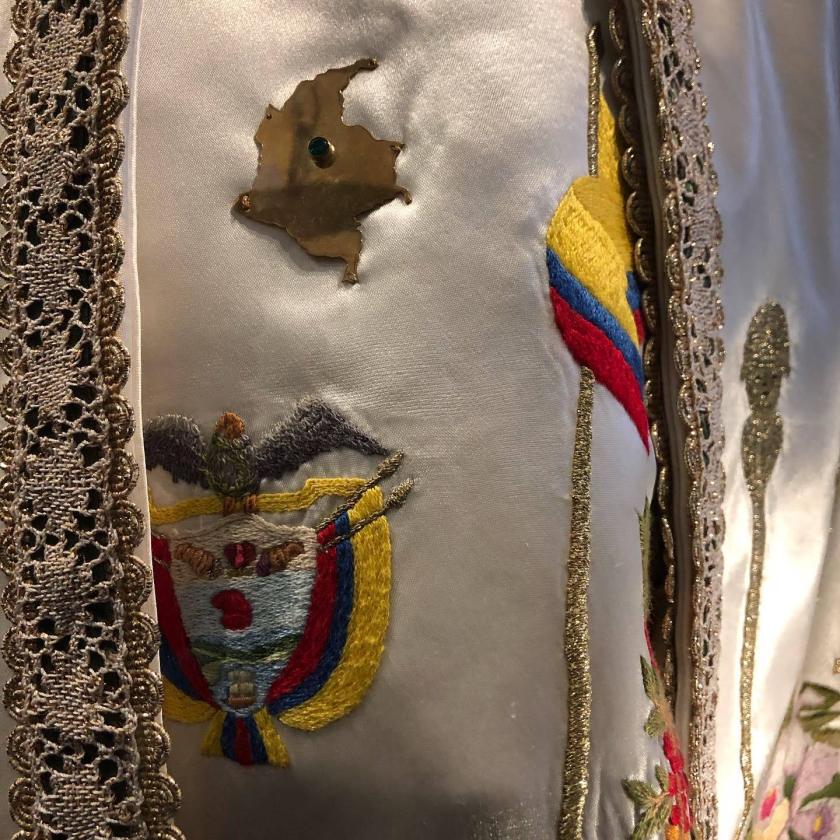
La bandera, el escudo y un mapa en oro con una esmeralda.
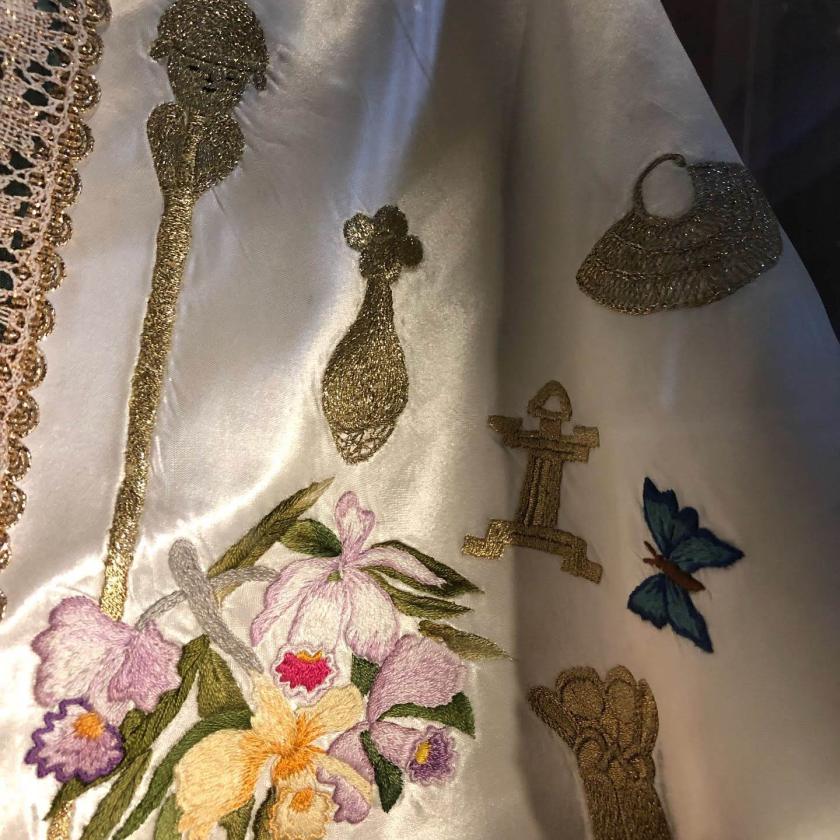
Artefactos pre-colombinos en oro, orquídeas y mariposas.
Y el café que no puede faltar.
La artista, doña María Mercedes de Duque.

Colombian Embroidery

Happy birthday, Colombia! July 20th, 1810.

To celebrate, we are going to talk about Colombian embroidery.

In Colombia, weaving/knitting is king (cotton, wool, Gynerium sagittatum, Furcraea, banana fiber, etc.) but embroidery is also appreciated.

Cartago Openwork

Let’s start with the most locally famous, Cartago (Valle del Cauca) openwork.

Penelope, the monument to the embroiderer, Cartago, Valle del Cauca, Colombia.

It is a type of drawnthread whitework. It is done on linen or cotton, but always evenweave. The threads of the ground fabric are drawn (cut) out and then new threads (cotton) are needlewoven in to create beautiful geometric designs on the bias.

Cartago openwork in progress.

The embroidery is used to decorate sheets, tablecloths, curtains, and the famous openwork guayaberas (Panama shirts.)

Openwork Guayabera

Fonquetá Crewelwork

In the highlands of the Cundinamarca state, sheep are raised, and with their wool, fabric is woven and embroidered.

Crewelwork from the Fonquetá artisanal workshop (@tallerartesanalfonqueta)

Nariño Appliqué

In the city of Pasto, Nariño, they weave woolen blankets which they then embroider with appliqué using cotton fabric and threads.

Nariño appliqué from cooperativa Ecotema

Infant of Prague Dress

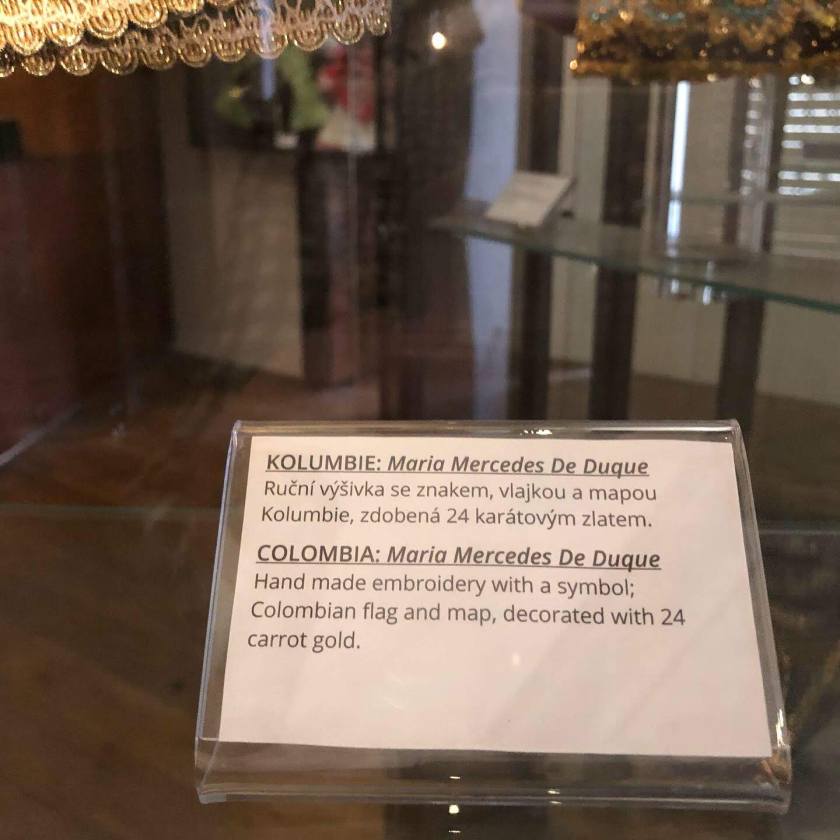
When I was in Prague, Czech Republic, last year (2019), I was able to admire Ms. María Mercedes de Duque’s beautiful work. She made the Infant a dress embroidered with the Colombian national symbols.

The Infant of Prague’s dress.
The flag, the shield, and a map in gold with an emerald.
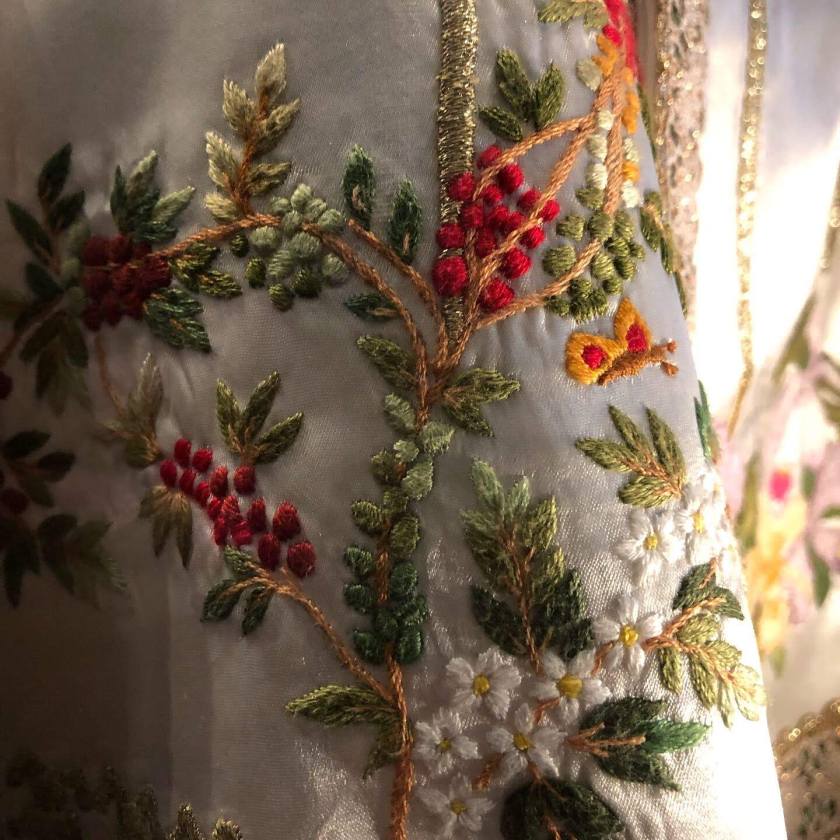
Pre-columbian gold artifacts, orchids and butterflies.
Can’t forget the coffee.
The artist, Ms. María Mercedes de Duque.